

If you’re reading this, you may be feeling overwhelmed by questions that keep you awake at night. Will my children be okay? Where will we live? How will I pay the bills? These fears are real, and they deserve honest answers—not vague reassurances.
I’m Diana O. Olanipekun, Esq., an Associate Attorney at Charles M. Green, APLC, with 17 years of family law experience in Los Angeles. I’m an active member of the California State Bar (#259278) and the Los Angeles County Bar Association. My practice focuses on child custody, divorce, and domestic violence cases, and I’ve written this article to give you clear, practical next steps—not just legal theory that leaves you more confused than when you started.
California is a no-fault divorce state, which means you don’t need to prove your spouse did something wrong to end your marriage. What matters more are the specific rules Los Angeles Superior Court and Orange County courts apply when deciding custody arrangements, support obligations, and how to divide property. Understanding these rules early can change the entire trajectory of your case.
If you’re in Los Angeles County—or anywhere in California—and you want to talk through your situation confidentially, I invite you to schedule a consultation by phone or Zoom. Sometimes the first step is simply understanding where you stand.
Divorce affects three core areas of your life simultaneously: your parenting time with your children, your physical safety, and your long-term financial stability. For many women, these concerns carry additional weight because of years spent as the primary caregiver, career sacrifices made for the family, or income gaps that developed while raising children.
A women-focused divorce lawyer pays particular attention to your caregiving history, any safety concerns, and financial vulnerability. This might mean documenting the thousands of hours you spent managing school pickups, doctor appointments, and homework help. It might mean identifying accounts your spouse controls that you’ve never accessed. Or it might mean creating a safety plan before you even file paperwork.
My goal is not to “attack” the other party or escalate conflict unnecessarily. The goal is to protect your rights and your children’s stability while working toward fair, durable solutions that allow everyone to move forward.
Common concerns I hear from women in Los Angeles include:
Keeping children enrolled in their current schools
Staying in the family home long enough to stabilize
Protection from a spouse who uses money, threats, or manipulation as control
Ensuring support orders reflect actual income, not underreported numbers
When there’s a history of emotional, financial, or physical abuse, trauma-informed advocacy becomes essential. This means understanding how abuse affects decision-making, communication, and safety planning—and adapting my approach accordingly.
I earned my J.D. from Boston College Law School in 2008, after completing my undergraduate degree in Political Studies at Pitzer College—a Claremont institution known for its social justice focus. I’ve been an active member of the California Bar since December 2008, and I’ve spent over seven years at Charles M. Green, APLC, handling complex family law matters throughout Southern California.
My practice breaks down roughly as follows:
|
Practice Area |
Approximate Focus |
|---|---|
|
Child custody and parenting plans |
30% |
|
Divorce and legal separation |
25% |
|
Domestic violence and protective orders |
20% |
|
Support, property, and other issues |
25% |
Colleagues have described me as “very compassionate and understanding towards both clients and opposing counsel, yet very fierce in advocating for her clients’ rights.” What this means in practice is that I prioritize settlement when it serves your interests—but I prepare every case as if it’s going to trial, because that preparation is what gives you leverage at the negotiation table.
Our firm’s founder, Charles M. Green, is both a Certified Family Law Specialist (CFLS) and a CPA. This combination is particularly valuable for women dealing with business valuations, investment portfolios, or suspected hidden assets. When your spouse owns a company or manages the family finances, having a lawyer backed by accounting expertise can uncover what you couldn’t see on your own.
We serve clients throughout Los Angeles and Orange County Superior Courts and offer virtual consultations statewide. Our office also has Spanish-speaking staff available for bilingual support—because navigating the legal system is hard enough without a language barrier.
Most women’s divorce cases center on four pillars: custody and parenting time, safety, financial support, and division of property and debt. These issues are interconnected—your custody schedule affects your child support calculation, your safety concerns affect custody recommendations, and your property division affects your ability to rebuild.
Here are questions I hear almost every week from women across Los Angeles:
“Will I lose time with my children?”
“Can I stay in our home, at least until the kids finish school?”
“How much support will I receive—or will I have to pay?”
“What happens to his business or my retirement accounts?”
“How do I protect myself if he controls all the money?”
California Family Code governs these issues, and courts in Los Angeles County apply specific standards: the “best interests of the child” for custody, “community property” rules for assets, and guideline formulas for support calculations. The sections below walk through each topic from a woman’s perspective, focusing on concrete decisions and documents rather than abstract theory.
Throughout, I’ll use practical examples—like an 8-year marriage with two kids in Culver City, or a 20-year marriage in Pasadena where one spouse is self-employed—to make these concepts relatable to your situation.
California law no longer presumes that mothers automatically receive custody. Courts focus on the child’s “best interests” under California Family Code §3011, which means examining who has actually been doing the parenting work—not just who has the higher income or more flexible schedule.
When I evaluate a child custody case, I look at parenting history in detail: Who takes the kids to doctor appointments? Who helps with homework every night? Who attends IEP meetings and parent-teacher conferences? Who knows the names of their friends and teachers? This documentation becomes evidence that helps the court understand your role in your children’s lives.
Understanding the difference between legal custody and physical custody is essential:
|
Custody Type |
What It Covers |
|---|---|
|
Legal Custody |
Decision-making authority for health, education, welfare |
|
Physical Custody |
Where the child lives and who provides daily care |
Parenting plans can be structured in many ways—from equal 50/50 schedules to arrangements where children have a primary residence with one parent and regular time with the other. The right custody arrangement depends on your children’s ages, school schedules, each parent’s work commitments, and practical logistics.
For Los Angeles families, logistics matter enormously. A parenting plan that looks fair on paper can fall apart in practice if it ignores traffic patterns between Santa Monica and Glendale, or doesn’t account for a child’s after-school activities in Long Beach. I help clients design schedules that actually work in real life, not just on a court form.
I often use child-focused mediation and settlement conferences to resolve custody disputes without putting children in the middle. But when court becomes necessary, I prepare thoroughly for hearings in LA County courthouses—whether that’s Stanley Mosk downtown, the Pasadena courthouse, or the Long Beach facility.
Many women hesitate to raise domestic violence in divorce proceedings. They fear retaliation from their spouse, disbelief from judges, or emotional fallout for their children. I understand these concerns—and I also know that staying silent can put you and your children at greater risk.
Under California’s Domestic Violence Prevention Act, “domestic violence” includes more than physical harm. It encompasses:
Threats and intimidation
Stalking and harassment
Patterns of coercive control or isolation
Financial abuse and deprivation
Monitoring devices and digital surveillance
Evidence matters. I help clients gather texts, emails, photographs, medical records, police reports, and witness statements. Screenshots showing financial control or GPS tracking can be just as powerful as evidence of physical abuse. This documentation influences custody and visitation orders in significant ways.
A domestic violence restraining order (DVRO) can include:
Temporary custody of children
Orders requiring the abuser to move out of the family home
No-contact provisions protecting you and your children
Surrender of firearms
Specific exchange protocols for parenting time
My approach prioritizes safety while avoiding unnecessary escalation. When appropriate, I seek supervised visitation or monitored exchanges rather than advocating for complete cutoffs that a judge may view as unreasonable. This balanced approach protects your credibility with the court while still protecting your family.

California is a community property state. This means most assets and debts acquired between your date of marriage and date of separation are generally divided 50/50—regardless of whose name appears on the title or account.
Common community property assets in Los Angeles and Orange County divorces include:
Family homes and condos in neighborhoods from Beverly Hills to Long Beach
Retirement accounts: 401(k)s, pensions, CalPERS, CalSTRS
Stock options and RSUs from entertainment, tech, or healthcare employers
Interests in closely-held businesses
Investment and brokerage accounts
Vehicles, art, and other valuable personal property
Certain assets typically remain separate property: things you owned before marriage, inheritances, and specific personal gifts. But commingling—adding your spouse to the deed of a house you owned before marriage, or mixing inheritance funds with joint accounts—can blur these lines significantly.
This is where Charles M. Green’s dual expertise as a Certified Family Law Specialist and CPA becomes particularly valuable. When women have not managed the family finances, they often don’t know what assets exist. Our firm can analyze tax returns, business records, and financial statements to uncover income or assets that your spouse may be hiding or minimizing.
Example scenario: Imagine your spouse owns a production company in West Hollywood. He claims the business barely breaks even, yet you live in a $3 million home in the Hollywood Hills and take expensive vacations twice a year. A CPA-trained family law attorney can examine business bank statements, look for personal expenses run through the company, and work with valuation experts to determine what that business is actually worth for property division purposes.
I regularly see patterns where one spouse controls all the money: no access to passwords, an “allowance” for household expenses, or sudden drops in reported income right before divorce papers appear. If this sounds familiar, you’re not alone—and there are legal tools to address it.
Practical steps you can take safely before or during divorce:
Copy bank statements, investment account statements, and tax returns
Pull your credit report to identify accounts you may not know about
Note account numbers, login information, and financial institution names
Preserve emails discussing finances, purchases, or account access
Document lifestyle expenses that don’t match reported income
California law requires full financial disclosure through Preliminary and Final Declarations of Disclosure. Failure to disclose assets can result in severe penalties—including the court awarding 100% of a hidden asset to the other spouse in some cases.
When necessary, we use forensic accountants and subpoenas to banks, employers, and third parties to trace assets in high-net-worth or business-owner cases. But I also advise clients not to move or hide assets themselves—automatic temporary restraining orders (ATROs) take effect when a divorce petition is filed, and violating them can seriously damage your case.
Child support and spousal support are distinct concepts under California Family Code:
|
Support Type |
Purpose |
Governed By |
|---|---|---|
|
Child Support |
Cover children’s expenses: housing, food, education, healthcare |
Statewide guideline formula |
|
Spousal Support |
Help lower-earning spouse maintain standard of living and transition |
Family Code §4320 factors |
Temporary support orders issued early in a case often rely on software guideline calculations used by judges in Los Angeles and Orange County. These temporary orders maintain stability while the divorce process unfolds.
For long-term spousal support, courts consider factors including:
Length of the marriage
Each spouse’s earning capacity and marketable skills
Contributions to the other spouse’s education or career
Standard of living during the marriage
Caregiving responsibilities that affected employment
Age and health of both parties
History of domestic violence
Not every woman in divorce will receive alimony. If you’re the higher-earning spouse, you may have concerns about avoiding unfair or open-ended obligations. Either way, understanding how courts analyze support in your specific situation helps you plan realistically.
Example: Consider a 12-year marriage in Burbank where a wife paused her marketing career to raise two children. She hasn’t worked in eight years and would need time to update her skills and find employment. Courts would likely order spousal support for a period allowing her to become self-supporting—typically half the length of the marriage for marriages under 10 years, with more flexibility for longer marriages.
Contrast that with a physician in Irvine married to a lower-earning spouse who worked part-time while she completed residency and built her practice. She might be the one paying support, and her lawyer’s job would be to ensure the amount and duration reflect realistic expectations, not permanent dependency.
Divorce isn’t just the end of a marriage—it’s a restructuring of your entire financial plan. This is especially true for women with gaps in employment history or years spent as primary caregivers while their spouse’s career advanced.
I encourage clients to work with a financial planner or CPA to project realistic post-divorce budgets. What will your housing costs actually be? How much can you expect in support? What happens when that support ends? Our firm’s in-house CPA expertise helps answer these questions with numbers, not guesses.
Key financial considerations to discuss:
Retirement division: Qualified Domestic Relations Orders (QDROs) divide 401(k)s and pensions. Understand what you’re entitled to and how division affects your retirement timeline.
Health insurance: If you’re on your spouse’s plan, you’ll need coverage. COBRA is expensive; explore alternatives early.
Tax implications: Post-2018 divorces treat spousal support differently for tax purposes. Understand how support affects your tax picture.
I help clients think beyond the immediate crisis. What education or training would help you re-enter the workforce? How can you rebuild credit in your own name? What emergency savings cushion do you need?
Divorce often requires lifestyle adjustments. That’s a difficult reality, but focusing on what you can control—your plan, your goals, your next chapter—is more productive than fear.

Domestic violence can be physical, emotional, sexual, or financial. Many professional, educated women in Los Angeles quietly endure abuse that doesn’t leave visible bruises—but leaves lasting damage to their safety, confidence, and autonomy.
Coercive control often looks like:
Installing monitoring devices on your phone or car
Threatening to take the children if you leave
Blocking access to bank accounts or credit cards
Making immigration-related threats
Constant criticism and degradation designed to undermine your sense of self
California law recognizes these patterns as abuse, and family courts have tools to address them.
Protection options include:
|
Order Type |
How It’s Obtained |
Duration |
|---|---|---|
|
Emergency Protective Order (EPO) |
Through police at scene |
Up to 7 days |
|
Temporary Restraining Order (TRO) |
Filed with court, ex parte |
Until hearing (typically 21-25 days) |
|
Domestic Violence Restraining Order (DVRO) |
Issued after court hearing |
Up to 5 years, sometimes longer |
A restraining order can require the abuser to move out of the family home, stay away from your residence, workplace, and children’s schools, have no contact with you, surrender firearms, and follow temporary custody and support orders.
I help women create safety plans, gather evidence, and coordinate with advocates and therapists. I also work to ensure court orders are specific enough for police to enforce effectively—vague orders are harder to enforce when violations occur.
A finding of domestic violence significantly affects custody decisions. Under California Family Code §3044, there is a presumption against awarding sole or joint custody to a parent who has committed domestic violence within the past five years. This presumption can be rebutted, but it shifts the burden to the abusive parent.
When safety concerns exist but some parent-child contact is appropriate, courts may order:
Professional supervised visitation at a designated facility
Therapeutic visitation with a licensed counselor present
Specific exchange protocols in public locations
Domestic violence can also influence support decisions, especially when abuse affected your ability to work, advance in your career, or access marital funds.
One important caution: don’t agree to “mutual” restraining orders or watered-down language without understanding the long-term custody impacts. Mutual orders can make it appear that both parties were equally at fault, which affects how judges and mediators view your case going forward.
My goal is to protect safety and stability—not to weaponize allegations. Judges and mediators can distinguish between genuine safety concerns and tactical maneuvering, and maintaining credibility is essential for favorable outcomes in your case.
Divorce officially begins when one spouse files a Petition for Dissolution in California Superior Court and serves it on the other spouse. This starts a mandatory six-month waiting period before the divorce can be finalized—though most contested cases take considerably longer.
Key stages from a woman’s perspective:
Initial consultation and assessment – Safety planning, financial picture, custody concerns
Filing and service – Petition filed, automatic temporary restraining orders (ATROs) take effect
Temporary orders – Emergency orders for custody, support, and protection if needed
Financial disclosures – Both spouses must exchange detailed financial information
Discovery – Formal requests for documents, depositions if necessary
Negotiation and mediation – Attempting resolution on custody, support, property
Settlement or trial – Most cases settle; some require judicial determination
Entry of judgment – Divorce finalized, orders become enforceable
LA County has several family law courthouses—Stanley Mosk in downtown Los Angeles, the Pasadena courthouse, Chatsworth, Long Beach, and others. Procedures and local rules differ slightly by courthouse and department, and experienced divorce lawyers know these differences.
I tailor strategy to each client’s situation. For some women, a cooperative, mediation-friendly approach is best. For others—especially those facing financial manipulation or safety threats—early protective orders and a firm litigation posture are necessary to stop harm.
Throughout the process, you should understand each step, each court date, and each proposed agreement. I take extra time to explain options in plain English—and through our Spanish-speaking staff when needed.
Many women want to avoid drawn-out courtroom conflict but still need to protect themselves and their children. Mediation offers a confidential process where a neutral mediator helps divorcing spouses reach agreement on custody, support, and property—with attorneys advising behind the scenes or attending sessions.
Even in mediation, you should have your own lawyer to:
Review proposals before you agree to anything
Check financial disclosures for completeness and accuracy
Ensure the agreement reflects your rights under California law
Identify issues you might not think to raise
I often use settlement conferences and written proposals to resolve complex issues—especially parenting schedules and financial arrangements—without trial. But I prepare every case thoroughly in case settlement fails.
“Settling” should mean achieving a stable, fair outcome. It should never mean surrendering under pressure because you’re exhausted or scared. My job is to help you distinguish between wise compromise and unsafe concessions—and to make sure the agreement you sign actually protects your interests.
I represent diverse women throughout Southern California: professionals in entertainment and tech, business owners, healthcare workers, academics, stay-at-home mothers, and women returning to work after long caregiving breaks. Your unique needs shape how I approach your case.
Geographic coverage includes:
Los Angeles neighborhoods: Beverly Hills, West Hollywood, Santa Monica, Pasadena, Woodland Hills, the South Bay
Orange County cities: Irvine, Newport Beach, Fullerton, Anaheim, and surrounding areas
Virtual consultations available statewide for clients anywhere in California
Our firm offers both in-person and virtual consultations, allowing women to seek advice discreetly—during a lunch break, after bedtime routines, or from a safe location away from a controlling spouse.
We’re sensitive to cultural and immigration concerns that affect how women experience divorce and domestic violence. Our Spanish-speaking staff provides bilingual support throughout the process, because navigating the family court system shouldn’t require struggling with language barriers.
Outside my legal practice, I mentor young women through local nonprofits, helping girls define their goals and build concrete paths to achieve them. This work shapes my commitment to clients: divorce is difficult, but it can also be the beginning of a life you design on your own terms.
Choosing a lawyer feels personal and vulnerable. You’re sharing details about your marriage, your finances, your parenting, and sometimes your safety. The right attorney should make you feel heard, not judged.
Key factors to consider:
Extensive experience with custody disputes and domestic violence
Comfort discussing sensitive topics without rushing you
Clear explanations of legal options and likely outcomes
Responsiveness to calls, emails, and questions
Familiarity with LA and Orange County courts, judges, and procedures
Questions to ask in an initial consultation:
“How do you approach cases involving controlling spouses?”
“What is your strategy for my custody concerns?”
“How do you communicate with clients between court dates?”
“Based on what I’ve told you, what outcomes are realistic?”
Some women feel more comfortable with a female attorney. That’s a valid consideration. But ultimately, your lawyer’s skill, judgment, and alignment with your values matter most. A good family law attorney—regardless of gender—will advocate fiercely for your interests while treating you with respect.
Trust your instincts. If you feel dismissed, rushed, or pressured in a first meeting, keep looking. The right counsel will respect your concerns and explain your legal strategies clearly.
Taking one small step doesn’t mean you’re ready to file tomorrow. It means you’re gathering the information you need to make informed decisions about your life, your children, and your future.
An initial consultation with me typically covers:
Your safety situation and any immediate concerns
Your children and custody priorities
Your financial picture and property questions
Timing considerations and what to expect from the divorce process
The goal is for you to leave with a clearer picture of your legal options and likely outcomes—not a pressure pitch to sign a retainer.
Consultations can be scheduled by phone or online for women throughout Los Angeles County, Orange County, and across California through virtual appointments. Whether you’re in Beverly Hills or the Daily Journal delivery area in Long Beach, whether you’ve been married three years or thirty, you deserve counsel who understands what you’re facing.
My approach combines compassion with focused advocacy: protecting your children, safeguarding your safety, and building a stable financial foundation for your next chapter. Peers, other attorneys, and clients have seen that balance in action through contentious custody cases, complex property disputes, and difficult domestic violence matters resolved without unnecessary escalation.
If you’re concerned about your children, your safety, or your financial future in divorce, I invite you to reach out to Charles M. Green, APLC. Tell us your story. Let’s start creating a plan that protects your interests and your children’s well-being—so you can move forward with clarity and confidence.


Diana O. Olanipekun, Esq., brings not only a wealth of family law and divorce expertise to Charles M. Green, APLC, but also an invaluable perspective as a woman profoundly understanding the nuanced challenges female clients face. Admitted to the California State Bar in 2008, Diana has passionately advocated for her clients’ rights across Los Angeles and Orange County, offering a blend of professional acumen and personal empathy that resonates with women navigating the complexities of divorce and family law matters.
As an Associate Attorney within our firm, Diana is pivotal in all aspects of our family law cases. Her daily responsibilities include conducting thorough legal research and crafting detailed declarations, memorandum of points and authorities, and briefs, all while bringing a keen sense of empathy and understanding to her work. She is adept at preparing Settlement Agreements and Judgments and leverages her substantial litigation experience in the courtrooms of Los Angeles and Orange County Superior Courts.
Diana’s approach is both professional and personable, embodying a blend of strength and sensitivity. She understands women’s emotional and practical challenges during these difficult times and is committed to empowering her clients through steadfast legal support and advocacy. Her experience as a woman in the legal field adds a layer of trust and confidence for female clients, ensuring they feel understood, supported, and confidently represented. With Diana O. Olanipekun on your side, you gain not just an attorney but a fierce ally who truly grasps the stakes of what you’re fighting for.
Diana O. Olanipekun
213-387-5015
e-mail: diana at greenlawcorp.com
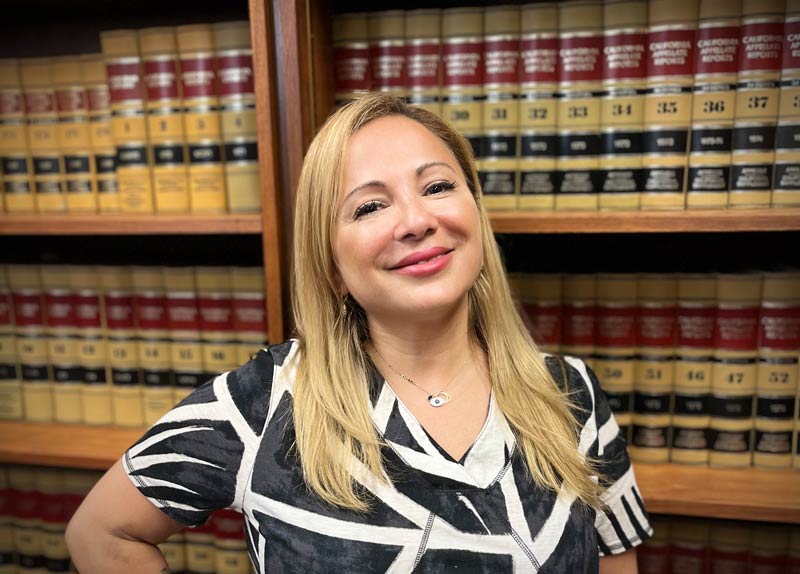
Meet Fabiana Cristina Piroyansky, a pillar of support and understanding to all our clients navigating the complexities of divorce and family law cases. An accomplished professional with a law degree from the prestigious University of Buenos Aires, Argentina (currently inactive), Fabiana brings a profound cultural and emotional intelligence to our team. For over 17 years, she has been the right hand of Charles M. Green, offering compassionate assistance, clear explanations, and reassurances to clients when they need it the most.
Fabiana understands that the challenges women face during divorce or family disputes are unique and often emotionally charged. Her experience, knowledge, and empathy help her provide support that is sensitive to the distinct dynamics women navigate in these situations. She is particularly committed to ensuring that every woman feels heard, respected, and empowered throughout their legal journey.
With Fabiana by your side, rest assured that not only will you be thoroughly informed about all aspects of your case, but you’ll also have an empathetic ear and a caring heart to accompany you through this challenging time. She is an integral part of our mission at Charles M. Green, APLC, which is to provide every client with the highest level of legal and emotional support throughout their family law proceedings.
“I’m here to help you with concerns or questions you may have.”
Fabiana Piroyanski
213-387-5015
e-mail: fabi at greenlawcorp dot com
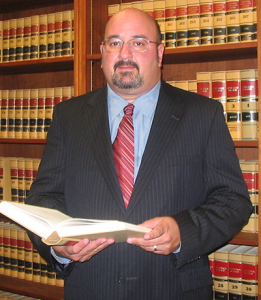
Divorce clients who are mothers find a unique advocate in Charles M. Green, not only because of his profound expertise in family law and divorce matters but also because of his compassionate approach as a caring father. Charles understands the deep emotional complexities involved in a divorce, particularly for women, drawing from his extensive legal and financial background and his own experiences of parenthood. His commitment to your case goes beyond professional guidance; it’s a commitment grounded in empathy and a desire to protect and nurture your family’s future.
Charles M. Green, a Certified Family Law Specialist recognized by the State Bar of California Board of Legal Specialization, is esteemed by colleagues and courts across Southern California for his authority in family law and divorce proceedings. His specialized practice in women’s divorce issues offers seasoned legal counsel through intricate challenges, emphasizing protecting your interests and rights with paternal care that only someone who truly understands the value of family can provide.
Together, Diane and Charles grasp the matters closest to your heart. Their collaborative efforts aim to settle your divorce and family law dilemmas through the most friendly means possible, always ready to staunchly defend your rights against uncooperative counterparts. This ensures you step into the next chapter of your life positively and confidently, minimizing emotional and financial distress. With Charles M. Green, you gain a lawyer and a dedicated advocate who understands the importance of parental bonds and the need for a compassionate resolution that honors your family’s well-being.